Sample Project 2
Borehole Projects and Scope
We give you a snap shot of the summaries of typical borehole project scope, with break down of scope. This will give you an idea of our interest.
Borehole Projects and Scope
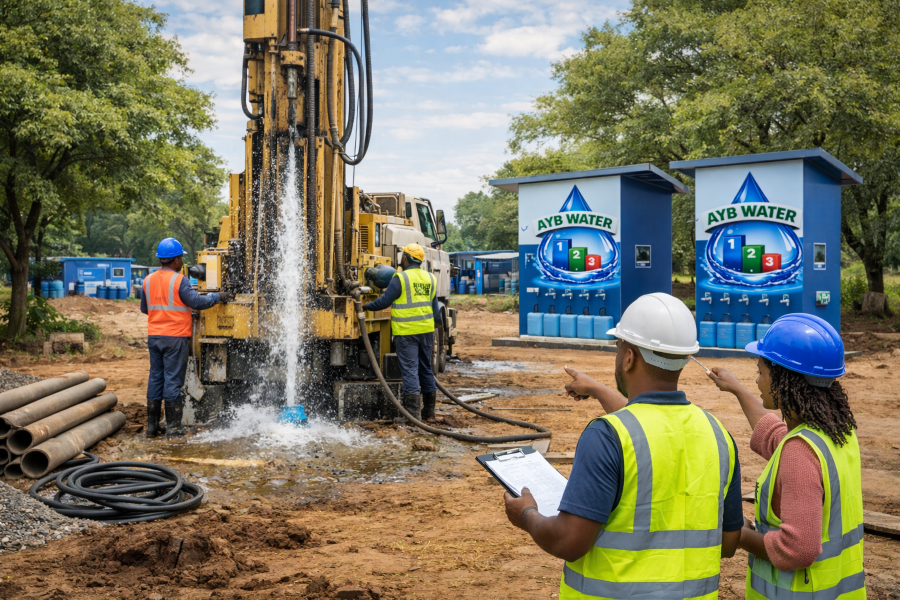
For example with near estimates, deploying decentralized water infrastructure across 200 villages involves drilling localized community boreholes powered by solar energy, connected to secure distribution kiosks.
A standard municipal/NGO-grade community system averages $15,000 to $25,000 USD per village, depending on drilling depth and ground geology. For a 200-village initiative, the total turnkey capital expenditure ranges from $3.0 Million to $5.0 Million USD.
Cost Breakdown Per Village: Drilling & Casing ($6,000 - $9,000): Hydrogeological surveying, drilling (typically 60-100 meters), and heavy-duty PVC/steel well lining.
Solar Pumping & Storage ($5,000 - $8,000): Submersible DC brushless solar pump, solar array, support structure, and an elevated 5,000-10,000 liter gravity-feed water tank.
Distribution Kiosk ($2,000 - $4,500): A brick-and-mortar or reinforced container shelter housing multi-tap dispensing stations.
Prepaid Smart Metering ($2,000 - $3,500): Automated, token or mobile-money electronic smart meters installed at the kiosk taps. This ensures transparent, pay-as-you-go revenue collection to fund long-term maintenance.
This decentralized model bypasses massive pipe grids, providing immediate, self-sustaining water security directly to rural communities.